
Call: 08045804888
 Send Inquiry
 Send Inquiry
Busbar Trunking System
Price 3148 INR/ Kilograms
MOQ : 500 Kilograms
Busbar Trunking System Specification
- Length
- As per customer requirement
- Dielectric Strength
- 3 kV for 1 Minute
- Rated Current
- 400A - 6300A
- Standards
- IEC 61439-6, IS 8623
- Rated Voltage
- 415 V AC
- Mechanical Strength
- High; Compliant with IEC/IS Standards
- Fire Resistance
- Complies with IEC 60695-11-10
- Insulation
- High-quality Epoxy Insulation
- Enclosure Protection
- IP 55 / IP 65
- Short Circuit Withstand
- Up to 80kA (1s)
- Product Type
- Busbar Trunking System
- Frequency
- 50/60 Hz
- Joint Type
- Bolt Joint / Plug-in Type
- Application
- Industries, Commercial Complexes, Power Plants
- Temperature Rise
- Within IEC Standard Limits
- Installation
- Indoor and Outdoor
- Material
- Copper / Aluminum Conductor
- Customization
- Available as per project needs
- Color
- Grey
- Conductor Configuration
- Sandwich or Air Insulated
Busbar Trunking System Trade Information
- Minimum Order Quantity
- 500 Kilograms
- Supply Ability
- 15000 Kilograms Per Month
- Delivery Time
- 1 Months
About Busbar Trunking System
Busbar Trunking System
Ganpati Electricals Pvt. Ltd. is an authorized business partner of Larsen & Toubro for Busbar Trunking System, which is used in hotels, data centers, hospitals, airports, industries, factories, apartments etc. Electrical busbar systemsare a modular approach toelectrical wiring.
Busbar Trunking System is a prefabricated electrical distribution system consisting of busbars in a protective enclosure, including straight lengths, fittings, devices and accessories. These are mainly of two types namely Air-Insulated Trunking Busbar System and Sandwich Trunking Busbar System.
Sandwich Busbar Trunking System is epoxy insulated and used for transferring 400A to 6300A current for up to a maximum of 1000V. Compaired to this Conventional Busbar Trunking System is air insulated and is used for 100-400A current for upto a maximum of 415V. Besides these two, there comes also air-insulated Medium Voltage Busbar Trunking System for 100A to 6300A current for up to a maximum load of 33 kV.
Busbar Trunking System of L&T comes in a metal enclosure and is quite compact in size. It requires no maintenance and can easily last for more than 20 years. Compared to normal cabling, it requires much less space and can be installed within a very short time.
Sandwich Busbar Trunking System has a high tolerance to heavy voltage drop. It has single bolted copper or alumium busbars meant for 400A to 6300A current for a load of maximum 1000V.
Compared to Sandwich Busbar Trunking System, Conventional Busbar Trunking System is air-insulated. It has multi-bolted copper busbars housed in a 1.6 mm thick GI container having epoxy coating. Conventional Busbar Trunking System is meant for 100A to 400A current for an operating voltage upto 415V.
Larsen & Toubro has also Medium Voltage Busbar Trunking System for 400A to 5000A current for a load of 3.6 kV to 24kV. The enclosure is made of GI, Stainless Steel or Aluminium and is epoxy coated. The Busbars are made of Copper or Aluminium having multiple bolted splice plate joints
All types of L&T Busbar Trunking Systems are ISO approved for their quality and for fire safety.
Superior Safety & Compliance
Ensuring optimal protection, each busbar trunking system complies with international standards, including IEC 61439-6, IS 8623, and IEC 60695-11-10 for fire resistance. The system undergoes rigorous testing for dielectric strength (3 kV for 1 minute) and short-circuit withstand (up to 80kA for 1 second). Mechanical robustness and controlled temperature rise keep operations safe in demanding environments.
Customizable Solutions for Diverse Applications
Designed for broad utility in industries, commercial complexes, and power plants, this system can be tailored in length, configuration, and rating as per project needs. Flexible joint options (bolt or plug-in type) facilitate seamless installation in various architectural layouts, and the enclosure protection levels (IP55/IP65) ensure reliable performance outdoors as well as indoors.
FAQs of Busbar Trunking System:
Q: How is the busbar trunking system installed for different environments?
A: The busbar trunking system is designed for both indoor and outdoor installations. Thanks to its IP55/IP65 enclosure protection, it can be safely mounted in environments exposed to dust and moisture. The modular construction and choice of joint types (bolt joint or plug-in) allow for flexible adaptation to project layouts.Q: What benefits does the sandwich or air-insulated conductor configuration offer?
A: Sandwich-insulated configurations provide compact, low-inductance solutions with enhanced fire resistance, ideal for high-density areas. Air-insulated options are cost-effective and easier to maintain, making them suitable for projects where space and accessibility permit. Both configurations are engineered to deliver high dielectric strength and mechanical robustness.Q: When should a busbar trunking system be considered over traditional cabling?
A: A busbar trunking system should be chosen when high currents (400A6300A), modularity, rapid installation, and reduced footprint are required. They are preferable in facilities like power plants, large commercial complexes, or industrial sites seeking reliable, scalable, and safer power distribution compared to conventional cable routes.Q: Where is the busbar trunking system most effectively used?
A: This system is ideal for use in industries, commercial buildings, and power stations. Its robust design, high fire resistance, and compliance with IEC/IS standards enable dependable operation in both high-load and critical environments, indoors or outdoors.Q: What is the process for customizing the busbar trunking system for a specific project?
A: Customization involves selecting appropriate conductor material (copper or aluminum), desired rating (current and voltage), insulation type, length, color, joint type, and enclosure protection according to project requirements. Manufacturers or suppliers in India assess your needs and tailor the system for optimal performance and compliance.Q: How does the busbar trunking system ensure enhanced fire resistance?
A: Fire resistance is achieved by using high-quality epoxy insulation and compliance with IEC 60695-11-10 standards. The systems dielectric strength and sandwich-insulated options further minimize fire risk, providing protection in environments demanding stringent safety.Q: What are the main advantages of using high-quality epoxy insulation in busbar trunking systems?
A: Epoxy insulation offers superior dielectric properties, long-term durability, and improved safety by reducing the risk of short circuits and fire hazards. It preserves system integrity even under high temperatures and provides consistent performance over extended periods.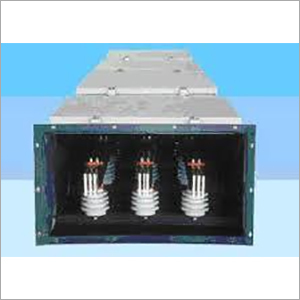
Tell us about your requirement

Price:
Quantity
Select Unit
- 50
- 100
- 200
- 250
- 500
- 1000+
Additional detail
Mobile number
Email

More Products in Busbar Trunking System Category
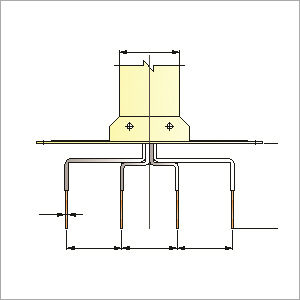
Sandwich Busbar Flange End
Price 3148-3523 INR / Kilograms
Minimum Order Quantity : 500 Kilograms
Dimension (L*W*H) : 160mm x 70mm x 30mm
Power Factor : >0.95
Rated Voltage : 690 V
Energy Consumption : Low
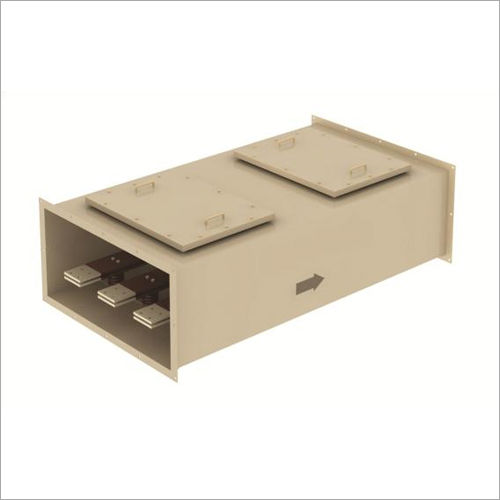
Medium Range Busbar Straight Length
Price 3148-3523 INR / Kilograms
Minimum Order Quantity : 500 Kilograms
Dimension (L*W*H) : 4000 mm x 100 mm x 40 mm (Typical)
Power Factor : >0.95
Rated Voltage : 415 V AC
Energy Consumption : Low (measured as per usage)
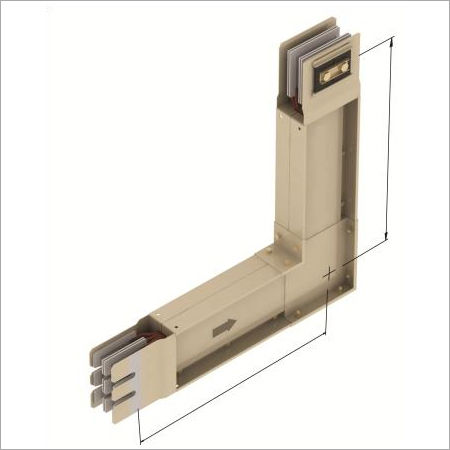
Sandwich Busbar Flatwise Elbow
Price 3148-3523 INR / Kilograms
Minimum Order Quantity : 500 Kilograms
Dimension (L*W*H) : 300 mm x 40 mm x 80 mm
Power Factor : >0.98
Rated Voltage : 690 V
Energy Consumption : Low (passive component)
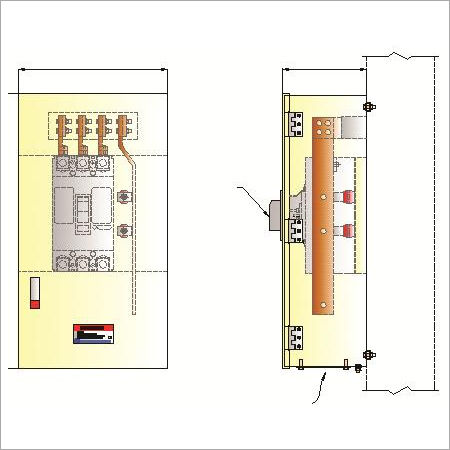
Sandwich Busbar Plug-in Box
Price 3148-3523 INR / Kilograms
Minimum Order Quantity : 500 Kilograms
Dimension (L*W*H) : 240 x 120 x 80 mm
Power Factor : 0.95
Rated Voltage : 415 V AC
Energy Consumption : Low

Contact Details
Ganpati Electricals Pvt. Ltd.
GST : 07AAACG9076H1ZE
- U-110, Surya Arcade, Main Vikas Marg, Shakarpur,Delhi - 110092, India
- Phone :8860076125
 Send Inquiry
|


Developed and Managed by Infocom Network Private Limited.
